
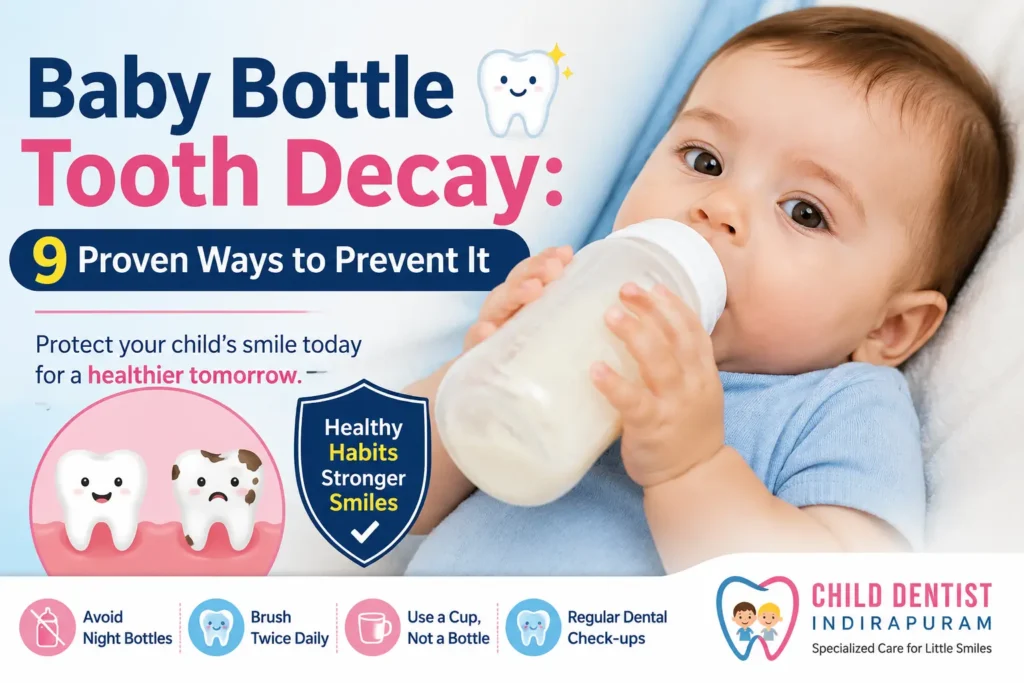
When it comes to your baby’s oral health, Baby Bottle Tooth Decay is one of the most common yet preventable dental problems. Many parents unknowingly allow habits that increase the risk of tooth decay in infants and toddlers. The good news is that with proper knowledge and preventive care, you can keep your child’s smile healthy from the very beginning.
At Child Dentist Indirapuram, we frequently help parents identify the early signs of Baby Bottle Tooth Decay and provide preventive treatments that protect children’s teeth for years to come.
Table of Contents
- What is Baby Bottle Tooth Decay?
- What Causes Baby Bottle Tooth Decay?
- Early Signs You Should Never Ignore
- Which Babies Are at Higher Risk?
- Why Early Treatment Matters
- 9 Proven Ways to Prevent Baby Bottle Tooth Decay
- When Should You Visit a Pediatric Dentist?
- Frequently Asked Questions
- Final Thoughts
What is Baby Bottle Tooth Decay?
Baby Bottle Tooth Decay is a type of early childhood tooth decay caused by frequent exposure to sugary liquids such as milk, formula, juice, or sweetened drinks.
When babies sleep with a bottle, the liquid stays around their teeth for hours. During sleep, saliva production decreases, allowing bacteria to convert sugar into harmful acids that gradually damage the enamel.
Although it usually affects the upper front teeth first, it can eventually spread to multiple teeth if left untreated.
What Causes Baby Bottle Tooth Decay?
Several daily habits can increase the risk of Baby Bottle Tooth Decay, including:
- Sleeping with a milk bottle
- Frequent bottle feeding throughout the night
- Juice in feeding bottles
- Sweetened milk
- Delayed oral cleaning
- Sharing spoons with adults
- Poor brushing habits
- Excess sugar consumption
These habits allow harmful bacteria to grow rapidly inside your child’s mouth.
Early Signs of Baby Bottle Tooth Decay
Recognizing Baby Bottle Tooth Decay early can prevent severe dental problems.
Common warning signs include:
- White chalky spots on teeth
- Brown discoloration
- Yellow stains
- Visible cavities
- Bad breath
- Tooth sensitivity
- Pain while eating
- Swollen gums
- Broken teeth
Many parents mistake these signs for normal staining, delaying treatment until cavities become painful.
Which Babies Are at Higher Risk?
Some children have a greater chance of developing Baby Bottle Tooth Decay.
Risk factors include:
- Sleeping with bottles every night
- Frequent breastfeeding throughout the night after teeth erupt
- Drinking sugary beverages
- Poor oral hygiene
- Parents with untreated dental decay
- Delayed first dental visit
- Excessive snacking on sugary foods
Why Early Treatment Matters
Ignoring Baby Bottle Tooth Decay can lead to serious complications.
These include:
- Tooth pain
- Difficulty eating
- Speech problems
- Premature loss of baby teeth
- Infection
- Dental abscess
- Damage to permanent teeth
- Expensive dental treatments later
Healthy baby teeth are essential because they guide permanent teeth into their proper position.
9 Proven Ways to Prevent Baby Bottle Tooth Decay
1. Never Put Your Baby to Sleep with a Bottle
This is the most effective way to prevent Baby Bottle Tooth Decay.
If your baby needs comfort before sleeping, offer plain water instead of milk or juice.
2. Clean Gums Before Teeth Appear
Even before the first tooth erupts, gently wipe your baby’s gums using a clean, soft cloth after feeding.
3. Brush as Soon as the First Tooth Appears
Use a soft baby toothbrush with a rice-sized amount of fluoride toothpaste.
Brush twice every day.
4. Avoid Sugary Drinks
Limit:
- Juice
- Flavored milk
- Soft drinks
- Sweetened beverages
Water is always the healthiest choice.
5. Reduce Night Feeding Gradually
Once your pediatrician recommends it, slowly reduce overnight bottle feeding to decrease sugar exposure.
6. Encourage Drinking from a Cup
Around 12 months of age, transition from bottles to sippy cups or open cups.
7. Offer Healthy Snacks
Choose nutritious foods like:
- Cheese
- Yogurt
- Apples
- Bananas
- Cucumbers
- Carrots
Avoid sticky candies and sugary biscuits.
8. Visit a Pediatric Dentist Early
Your child should have their first dental visit by their first birthday or within six months after the first tooth erupts.
Early dental checkups help detect Baby Bottle Tooth Decay before it becomes serious.
9. Make Oral Hygiene a Daily Routine
Teach children that brushing is fun.
Brush twice daily and supervise brushing until at least age seven.
How Is Baby Bottle Tooth Decay Treated?
Treatment depends on the severity of the decay.
Your pediatric dentist may recommend:
- Fluoride treatment
- Dental fillings
- Tooth-colored crowns
- Pulp therapy
- Stainless steel crowns
- Tooth extraction (only if necessary)
- Preventive fluoride applications
Early diagnosis usually means simpler and less expensive treatment.
When Should You Visit a Pediatric Dentist?
Book an appointment immediately if your child has:
- White spots on teeth
- Brown stains
- Tooth pain
- Swollen gums
- Bad breath
- Difficulty chewing
- Visible cavities
Early treatment helps preserve baby teeth and prevents future complications.
This recommendation is also supported by the American Academy of Pediatric Dentistry, which advises establishing a dental home by age one to help prevent early childhood cavities.
Frequently Asked Questions
Can breast milk cause Baby Bottle Tooth Decay?
Breastfeeding itself is healthy. However, prolonged overnight feeding after teeth erupt without cleaning the mouth may increase the risk.
At what age should my child stop using a bottle?
Most pediatric dentists recommend transitioning to a cup by 12–18 months.
Can Baby Bottle Tooth Decay be reversed?
If caught very early, fluoride treatments and improved oral hygiene may reverse initial enamel damage. Advanced cavities require dental treatment.
Is Baby Bottle Tooth Decay painful?
Yes. As decay progresses, children may experience pain, sensitivity, swelling, and difficulty eating.
How often should my child visit the dentist?
Every six months, or as recommended by your pediatric dentist.
Protect Your Child’s Smile Today
Baby Bottle Tooth Decay is preventable with healthy feeding habits, regular brushing, and early dental visits. Small daily changes can make a lifelong difference in your child’s oral health.
If you notice any early signs of tooth decay or want preventive dental care, our experienced pediatric dentists at Child Dentist Indirapuram are here to help.
Book your child’s dental check-up today and give them the gift of a healthy, confident smile.
Call us . 0120-4225557, 93133 99990