
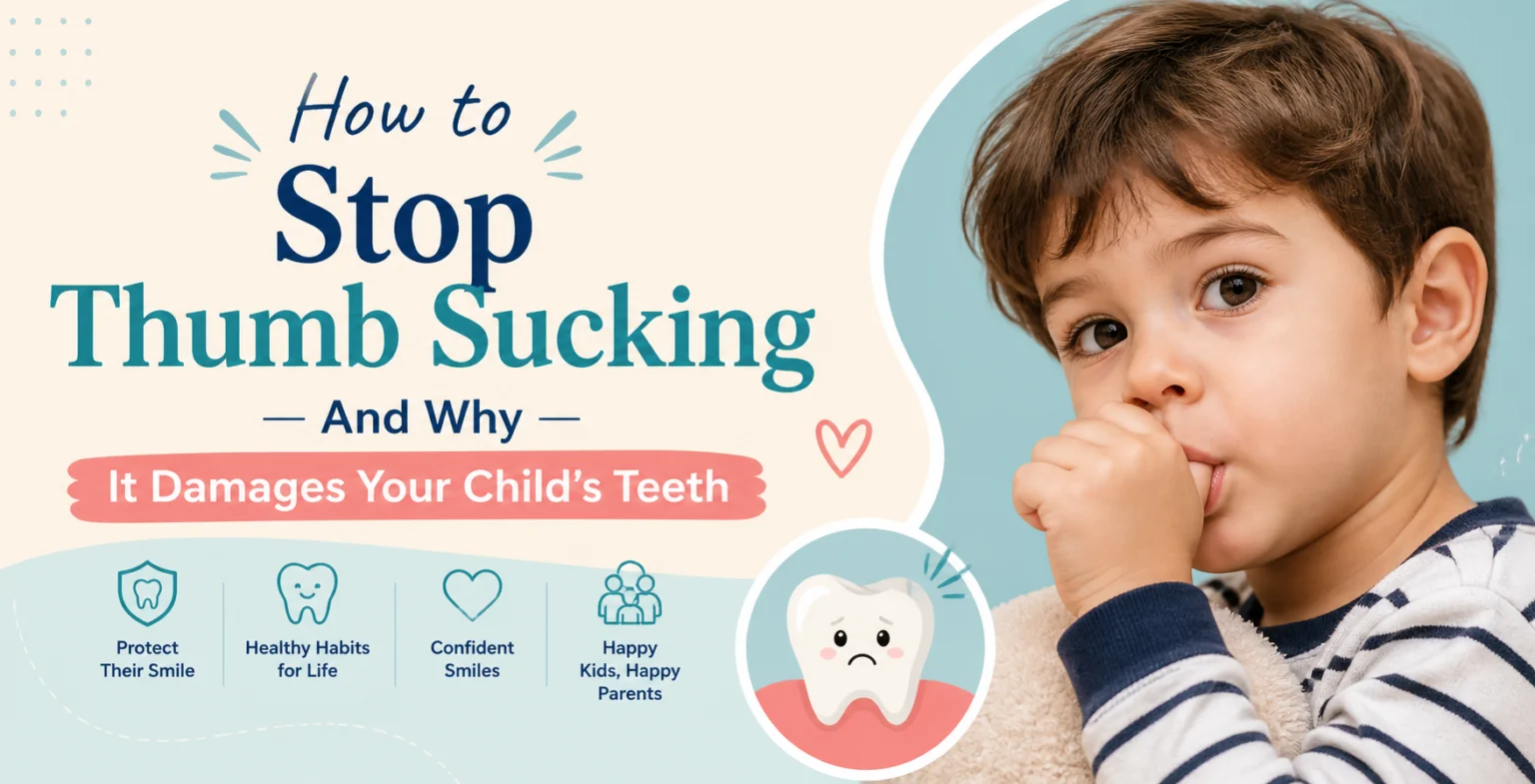
By Dr. Anamika Jain | Child Dentist Indirapuram | Renaissance Dental Clinic
But when the habit continues beyond age 4–5, it can begin to cause real and lasting damage to your child’s teeth, jaw, and overall oral development. As a Child Dentist in Indirapuram, I see the effects of prolonged thumb sucking regularly at Renaissance Dental Clinic — and the good news is: it is absolutely treatable when caught early.
| In this blog, we cover: What thumb sucking is, why it happens, the dental damage it causes, when to be concerned, and proven methods to help your child stop. |
What is Thumb Sucking and Why Do Children Do It?
Thumb sucking is a natural reflex. Even before birth, many babies suck their thumbs in the womb. It provides a sense of comfort, security, and self-soothing — which is why most infants and toddlers naturally gravitate toward it.
Most children stop on their own between the ages of 2 and 4. However, if the habit continues well past this age, especially once permanent teeth start coming in (around age 6), it needs to be addressed by a pediatric dental specialist.
At What Age Should You Be Concerned?
Here is a simple age guide parents can follow:
- 0 – 2 years: Completely normal. No action needed.
- 2 – 4 years: Habit is acceptable, but begin gentle discouragement.
- 4 – 5 years: If still continuing, consult a child dentist.
- 5+ years: Immediate professional evaluation recommended — permanent dental changes are likely.
If your child is above 4 years and still sucking their thumb regularly, it is time to visit a Pediatric Dentist in Indirapuram for an assessment.
How Thumb Sucking Damages Your Child’s Teeth
This is the most important section for parents to understand. Prolonged thumb sucking creates constant pressure on developing teeth and jaw bones. Here is what that can lead to:
1. Protruding Front Teeth (Buck Teeth)
The pressure of the thumb pushes the upper front teeth forward and the lower front teeth backward. This creates a visible misalignment that affects both appearance and function.
2. Open Bite
One of the most common effects — when the upper and lower front teeth do not meet even when the mouth is closed. This creates problems with biting food and can affect speech.
3. Narrowing of the Upper Jaw (Palate)
Regular thumb sucking creates inward pressure on the upper jaw, causing it to narrow over time. This can lead to a crossbite and make it difficult for permanent teeth to emerge properly.
4. Speech Problems
Children with open bite or jaw misalignment due to thumb sucking often develop lisps or difficulty pronouncing certain sounds like ‘s’, ‘z’, and ‘th’.
5. Skin and Nail Issues
Constant moisture from sucking can cause skin problems on the thumb — including cracking, calluses, and in some cases, nail infections.
| Key Fact: The intensity of the habit matters more than the frequency. Passive resting of the thumb in the mouth causes less damage than aggressive, vigorous sucking. |
How to Stop Thumb Sucking — Proven Methods
There is no one-size-fits-all solution, but these approaches have been proven to work when applied consistently:
1. Positive Reinforcement
Praise and reward your child every time they resist the habit. Use a sticker chart, small rewards, or verbal encouragement. Children respond far better to positive motivation than scolding.
2. Identify Triggers
Most children suck their thumb when they are bored, anxious, tired, or seeking comfort. Identify the trigger and address it directly — offer a favourite toy, spend extra time with them, or help them express their feelings.
3. Gentle Reminders (Not Punishment)
Use calm, gentle reminders during the day. Avoid shaming or punishing the child — this often worsens anxiety and increases the habit.
4. Thumb Covers or Gloves
A simple fabric glove or thumb cover worn during sleep can act as a physical barrier without causing discomfort. This works well as a reminder, especially at night.
5. Bitter Nail Polish (Consult Doctor First)
Some parents use a safe, child-friendly bitter coating on the thumb as a deterrent. Always consult your child dentist before using any product.
6. Orthodontic / Dental Appliances
If the habit is persistent and dental changes have already begun, a Pediatric Dentist in Indirapuram may recommend a palatal crib — a small custom-fitted device placed inside the mouth that makes thumb sucking less satisfying. This is painless and highly effective.
When Should You See a Child Dentist?
Visit Renaissance Dental Clinic if:
- Your child is above 4 years and still sucking their thumb daily
- You notice their front teeth are starting to protrude or separate
- Your child has developed a lisp or speech difficulty
- They are showing signs of jaw misalignment
- Previous attempts to stop the habit have failed
Early intervention from a certified child dentist can prevent the need for extensive orthodontic treatment later.
Why Choose Dr. Anamika Jain for Your Child?
Dr. Anamika Jain is a Gold Medalist Pediatric Dental Specialist with a post-graduation degree from King George’s Medical University (KGMC), Lucknow, and experience at RML Hospital, New Delhi.
At Renaissance Dental Clinic — a Certified Child Dental Centre — we treat children with the care, patience, and specialist expertise they deserve. We serve families across:
- Indirapuram
- Vaishali
- Vasundhara
- Ghaziabad
- Noida
- Delhi NCR
Conclusion
Thumb sucking is a normal part of childhood — but when it lingers past the right age, it can cause dental problems that last a lifetime. The earlier you act, the simpler the solution.
If you are concerned about your child’s thumb sucking habit, book a consultation with Dr. Anamika Jain at Renaissance Dental Clinic today. We are here to help your child build a healthy, confident smile — one visit at a time.
| Book Your Appointment: childdentistindirapuram.com | Renaissance Dental Clinic, Indirapuram, Delhi NCR |
Frequently Asked Questions (FAQs)
Q1. Is thumb sucking normal in newborns?
Yes, completely normal. It is a natural reflex that provides comfort. No action is needed until age 4.
Q2. Will the damage fix itself if my child stops?
In younger children (under 6), mild dental changes can self-correct once the habit stops. After age 6, professional intervention is usually needed.
Q3. Is a palatal crib painful for children?
No. It is a small, smooth orthodontic device placed inside the mouth. Children adjust to it quickly, and it does not cause any pain.
Q4. How many sessions does it take to correct thumb sucking-related dental damage?
It depends on the severity. Some cases resolve with habit-breaking appliances alone in 3–6 months. Others may require orthodontic treatment. A proper assessment is needed.
Q5. Can I visit Renaissance Dental Clinic from Noida or Ghaziabad?
Absolutely. We serve patients from Indirapuram, Vaishali, Vasundhara, Ghaziabad, Noida, and all of Delhi NCR. Visit childdentistindirapuram.com to book your appointment.
Renaissance Dental Clinic — Certified Child Dental Centre
Dr. Anamika Jain | Gold Medalist | KGMC Lucknow | RML New Delhi
Indirapuram | Vaishali | Vasundhara | Ghaziabad | Noida | Delhi NCR