
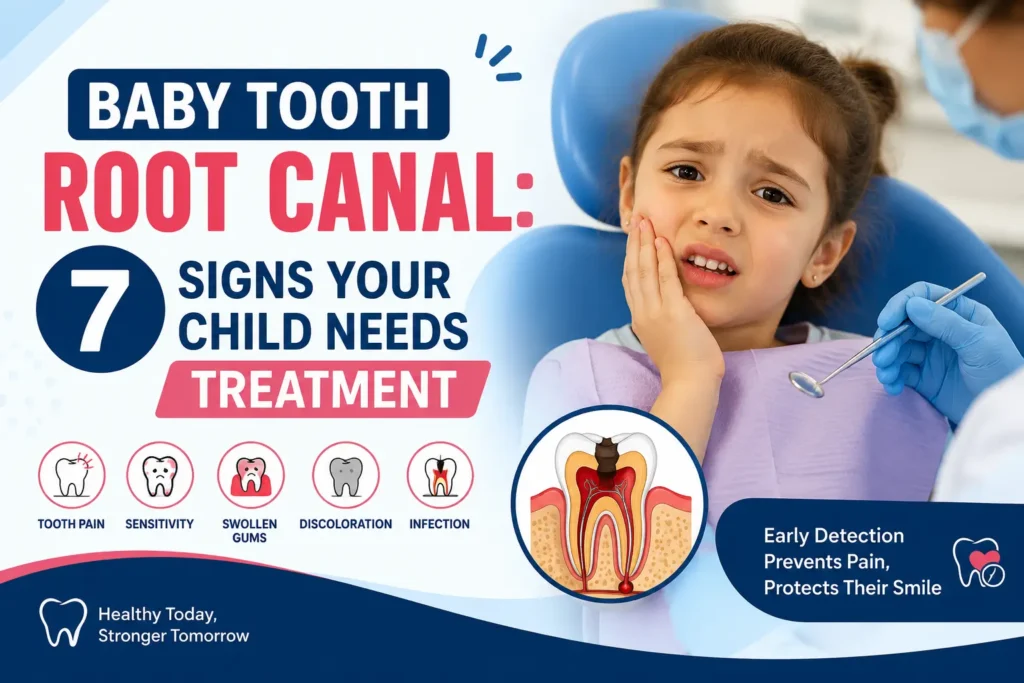
Many parents believe that baby teeth don’t need much care because they eventually fall out. However, healthy baby teeth play a vital role in your child’s oral development. They help children chew food properly, speak clearly, and guide permanent teeth into their correct position.
When a baby tooth becomes severely infected due to deep decay or injury, a baby tooth root canal may be the best way to save the tooth and protect your child’s long-term dental health.
Recognizing the early warning signs can prevent unnecessary pain, serious infections, and costly dental treatments in the future.
In this guide, you’ll learn everything you need to know about a baby tooth root canal, including symptoms, causes, treatment options, recovery, prevention tips, and answers to the most common questions parents ask.
Table of Contents
- What Is a Baby Tooth Root Canal?
- Why Are Baby Teeth Important?
- 7 Signs Your Child May Need a Baby Tooth Root Canal
- Common Causes of Baby Tooth Infection
- What Happens If an Infected Baby Tooth Is Left Untreated?
- How Is a Baby Tooth Root Canal Diagnosed?
- Baby Tooth Root Canal Procedure
- Is the Procedure Painful?
- Recovery After Treatment
- How to Prevent a Baby Tooth Root Canal
- Frequently Asked Questions
- Final Thoughts
What Is a Baby Tooth Root Canal?
A baby tooth root canal is a pediatric dental procedure performed when the soft tissue inside a baby tooth, known as the pulp, becomes infected or damaged. The pulp contains nerves, blood vessels, and connective tissue that keep the tooth healthy.
If bacteria reach the pulp because of untreated cavities, trauma, or cracks, your child may experience severe pain and swelling. Instead of removing the tooth, a pediatric dentist can clean the infection, disinfect the inside of the tooth, and seal it to preserve the tooth until it naturally falls out.
Depending on the severity of the infection, the procedure may be called a pulpotomy or pulpectomy.
Saving the natural baby tooth helps maintain proper spacing for permanent teeth and supports normal jaw development.
Why Are Baby Teeth Important?
Baby teeth are much more than temporary teeth. They have several important functions, including:
- Helping children chew food comfortably
- Supporting clear speech development
- Maintaining space for permanent teeth
- Guiding adult teeth into the correct position
- Promoting healthy jaw growth
- Building confidence with a healthy smile
Premature loss of a baby tooth can increase the risk of crowding, bite problems, and future orthodontic treatment.
7 Signs Your Child May Need a Baby Tooth Root Canal
1. Persistent Tooth Pain
One of the most common signs that your child may need a baby tooth root canal is continuous tooth pain.
The pain may occur while eating, brushing, or even during sleep. If the discomfort lasts for several days or keeps returning, the infection may have reached the pulp of the tooth.
2. Sensitivity to Hot and Cold Foods
Does your child complain about pain after eating ice cream or drinking warm milk?
Lingering sensitivity to hot or cold foods may indicate nerve damage inside the tooth.
Unlike temporary sensitivity, pain that lasts for several seconds or minutes should never be ignored.
3. Swollen or Red Gums
Healthy gums should look pink and firm.
If you notice swelling, redness, tenderness, or a small bump near one tooth, it could indicate an infection spreading beyond the tooth.
Swollen gums are often one of the earliest signs that a baby tooth root canal may be necessary.
4. Tooth Discoloration
An infected baby tooth may gradually change color.
The tooth may appear:
- Gray
- Brown
- Dark yellow
- Black
Discoloration often occurs because the nerve inside the tooth has been damaged.
5. Pain While Chewing
Children often avoid chewing on one side when a tooth hurts.
If your child refuses crunchy foods or complains of pain while eating, the infection may have reached the inner part of the tooth.
6. Gum Abscess or Pimple
A small white or yellow pimple on the gum is usually a dental abscess.
This indicates that bacteria have spread beyond the tooth root.
A dental abscess requires immediate attention from a pediatric dentist.
7. Loose Baby Tooth Before the Right Age
Baby teeth naturally become loose when it’s time for permanent teeth to erupt.
However, if a tooth becomes loose much earlier due to infection, the surrounding bone and tissues may already be affected.
Early treatment can often save the tooth.
Common Causes of a Baby Tooth Root Canal
Several dental problems can lead to pulp infection.
The most common causes include:
- Untreated cavities
- Deep tooth decay
- Tooth fractures
- Dental injuries
- Cracked teeth
- Poor oral hygiene
- Frequent sugary snacks and drinks
- Delayed dental treatment
Regular dental check-ups can help detect these issues before they become serious.
What Happens If an Infected Baby Tooth Is Left Untreated?
Ignoring an infected baby tooth can lead to serious complications.
Possible consequences include:
- Severe toothache
- Facial swelling
- Gum abscess
- Difficulty eating
- Trouble sleeping
- Spread of infection
- Damage to developing permanent teeth
- Premature loss of the baby tooth
- Increased need for orthodontic treatment later
Early diagnosis can prevent these complications and keep your child’s smile healthy.
How Does a Pediatric Dentist Diagnose the Problem?
Your pediatric dentist will perform a comprehensive examination that may include:
- A visual inspection of the tooth
- Gentle examination of the gums
- Digital dental X-rays
- Evaluation of tooth mobility
- Bite assessment
These tests help determine whether the tooth requires a filling, pulpotomy, pulpectomy, or extraction.
Baby Tooth Root Canal Procedure
Parents are often surprised by how simple the procedure is.
Step 1: Examination
The dentist examines the infected tooth and reviews digital X-rays.
Step 2: Local Anesthesia
A local anesthetic is used to numb the tooth, ensuring your child remains comfortable.
Step 3: Removing the Infection
The infected pulp is carefully removed using specialized pediatric dental instruments.
Step 4: Cleaning the Tooth
The inside of the tooth is disinfected thoroughly to eliminate bacteria.
Step 5: Filling the Tooth
The cleaned canals are filled with a child-friendly material designed for baby teeth.
Step 6: Stainless Steel Crown
In many cases, a stainless steel crown is placed over the treated tooth to restore strength and protect it until it naturally falls out.
The entire procedure is safe, effective, and commonly performed in pediatric dentistry.
Is a Baby Tooth Root Canal Painful?
Modern pediatric dentistry makes the procedure comfortable for children.
Local anesthesia prevents pain during treatment, and child-friendly techniques help reduce anxiety.
Most children experience significant relief after the infected tissue has been removed.
Recovery After a Baby Tooth Root Canal
Recovery is usually quick and uncomplicated.
Parents should:
- Offer soft foods for the first day
- Avoid sticky or hard foods
- Encourage gentle brushing
- Follow the dentist’s medication instructions
- Attend follow-up appointments
Most children return to their normal routine on the same day.
How to Prevent a Baby Tooth Root Canal
Preventive care is the best way to reduce the risk of severe tooth decay.
Here are a few simple habits that can protect your child’s teeth:
Brush Twice a Day
Use a fluoride toothpaste recommended for your child’s age.
Limit Sugary Foods
Reduce candies, chocolates, soft drinks, and sticky snacks.
Schedule Regular Dental Check-Ups
Visit a pediatric dentist every six months for professional cleaning and early cavity detection.
Consider Dental Sealants
Sealants protect the chewing surfaces of molars from decay.
Fluoride Treatments
Professional fluoride applications strengthen tooth enamel and reduce cavity risk.
Frequently Asked Questions
Can baby teeth really need a root canal?
Yes. When the pulp becomes infected, saving the tooth is often the best option to preserve space for permanent teeth.
Is extraction always necessary?
No. If the tooth can be saved, a baby tooth root canal is usually preferred over extraction.
How long does the procedure take?
Most treatments are completed within 30 to 60 minutes, depending on the severity of the infection.
Is a stainless steel crown necessary?
In many cases, yes. The crown protects the treated tooth from further damage until it naturally falls out.
Can my child eat after the procedure?
Yes. Once the numbness wears off, your child can eat soft foods. Your dentist will provide specific aftercare instructions.
Why Choose Our Pediatric Dental Clinic?
Our clinic is dedicated to providing gentle, child-friendly dental care in a comfortable environment. We use modern technology and evidence-based treatment methods to ensure every child receives the highest standard of care.
Our services include:
- Preventive dental care
- Cavity treatment
- Baby tooth root canal procedures
- Stainless steel crowns
- Fluoride treatments
- Dental sealants
- Emergency pediatric dental care
Our experienced team works closely with parents to make every visit stress-free and positive.
Final Thoughts
A baby tooth root canal is a safe and effective treatment that can save an infected baby tooth, relieve pain, and protect your child’s developing smile. Ignoring symptoms such as persistent tooth pain, swelling, discoloration, or sensitivity can lead to more serious complications and affect the health of permanent teeth.
If your child is experiencing any of these warning signs, schedule a dental examination as soon as possible. Early diagnosis and timely treatment can prevent unnecessary discomfort and support healthy oral development for years to come.
Contact Us
We’re Here to Help Your Child Smile with Confidence!
Have questions about your child’s dental health or want to schedule an appointment? Our friendly team is ready to assist you. Whether it’s a routine dental check-up, emergency dental care, or specialized pediatric treatment, we’re just a call or message away.
📍 Visit Our Clinic
Child Dentist Indirapuram
Add Your Complete Clinic Address Here
📞 Call Us
Phone: +91 93133 99990
📧 Email Us
Email: info@childdentistindirapuram.com
🕒 Clinic Hours
Monday – Saturday: 10:00 AM – 8:00 PM
Sunday: By Appointment Only
💬 Book Your Child’s Appointment Today
Fill out the contact form below, and our team will get in touch with you shortly to confirm your appointment.