
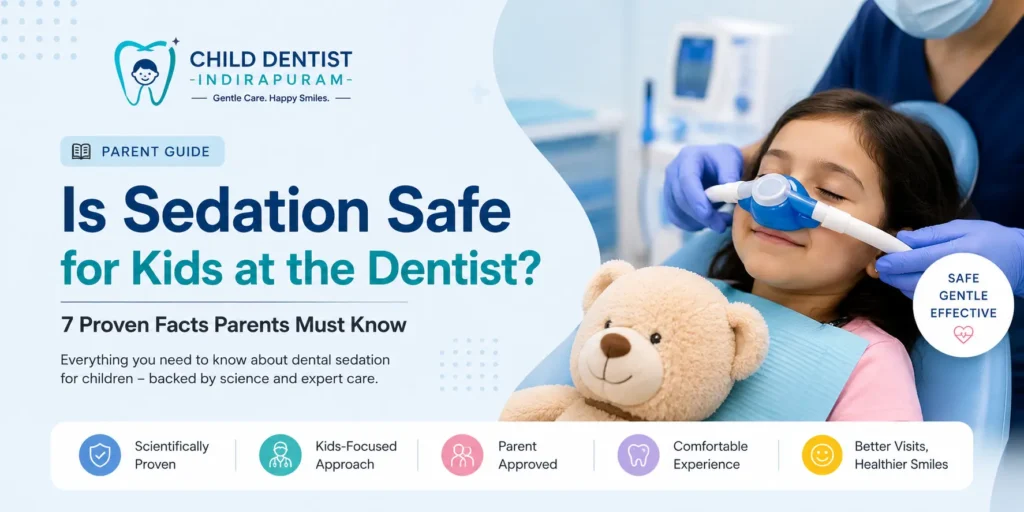
Is sedation safe for kids at the dentist? It’s one of the most common questions parents ask us at Renaissance Dental Clinic in Indirapuram, especially before a child’s first filling, extraction, or root canal. The short answer: yes — when it’s given by a trained pediatric dentist, in the right dose, with proper monitoring, dental sedation is a safe, well-researched way to help anxious or very young children get treated comfortably.
That said, “safe” doesn’t mean “risk-free,” and as parents ourselves, we believe you deserve honest, clear information before saying yes to sedation for your child. In this guide, Dr. Anamika Jain (Gold Medalist, KGMC Lucknow, and certified pediatric dental specialist) breaks down how sedation works, which types are used for kids, the real risks, and how our team keeps every sedation visit safe.
Table of Contents
- What Does “Sedation” Actually Mean in Pediatric Dentistry?
- Is Sedation Safe for Kids at the Dentist? What the Research Says
- Types of Sedation We Use for Kids
- When Is Sedation Recommended for a Child?
- Potential Risks and Side Effects
- How We Keep Sedation Safe at Renaissance Dental Clinic
- Questions to Ask Before Your Child Is Sedated
- Final Thoughts
What Does “Sedation” Actually Mean in Pediatric Dentistry?
Before answering is sedation safe for kids at the dentist, it helps to understand what sedation involves. Dental sedation uses medication to help a child relax and stay comfortable during treatment. It ranges from a light, calming effect where your child stays fully awake, to deeper sedation where they drift in and out of sleep.
Sedation is not the same as general anesthesia (GA), although GA is sometimes used for extensive dental work in very young children or kids with special needs — always in an accredited hospital or surgical setting, never in a routine clinic chair.
Is Sedation Safe for Kids at the Dentist? What the Research Says
According to the American Academy of Pediatric Dentistry’s Sedation and General Anesthesia Safety resources, sedation is considered safe for children when providers follow strict monitoring protocols — continuously tracking heart rate, oxygen levels, and breathing throughout the procedure.
Serious complications are rare. Most reported problems trace back to inadequate monitoring, incorrect dosing, or providers without dedicated pediatric sedation training — not the sedation itself. This is exactly why choosing a qualified, specialist pediatric dentist matters more than the specific drug used.
The American Dental Association’s patient guide to anesthesia and sedation also stresses that sedation should always be paired with pre-procedure health screening, so conditions like sleep apnea, obesity, or heart issues are identified before treatment begins.
Types of Sedation We Use for Kids
Not all sedation is the same. At our Pediatric Dental Consultation, Dr. Anamika Jain chooses from four main levels based on your child’s age, anxiety level, and the procedure required. You can also see our full breakdown on the Sedation Dentistry service page.
1. Minimal Sedation (Nitrous Oxide / “Laughing Gas”)
Inhaled through a small mask, nitrous oxide wears off within minutes and lets your child stay awake and responsive. This is the most common and lowest-risk option, ideal for mild anxiety.
2. Mild Oral Sedation
A liquid or syrup-based sedative given before the appointment to take the edge off anxiety. Your child stays conscious but relaxed, and may feel drowsy for a short while afterward.
3. Moderate (Conscious) Sedation
A stronger dose, sometimes combined with nitrous oxide, used for longer or more involved procedures such as multiple teeth filling or a root canal treatment. Children remain able to breathe on their own but may not remember the visit afterward.
4. Deep Sedation or General Anesthesia (GA)
Reserved for extensive dental work, very young children, or kids with special healthcare needs. This level requires an anesthesiologist and continuous vital-sign monitoring in a hospital or accredited surgical setting.
When Is Sedation Recommended for a Child?
We generally recommend sedation when:
- Your child has severe dental anxiety or fear of the dentist
- The procedure is lengthy or complex — multiple fillings, extractions, or a dental crown
- Your child is too young to sit still or cooperate for treatment
- Your child has special needs that make cooperation difficult
- Your child has a strong gag reflex or sensory sensitivities
- It’s a dental emergency and your child is in pain or distress
If your child only needs a routine cleaning or one small filling, sedation usually isn’t necessary — behavior-guidance techniques like tell-show-do, distraction, and positive reinforcement work well for most kids at our Indirapuram clinic.
Potential Risks and Side Effects
Even with a strong safety record, it’s fair to ask is sedation safe for kids at the dentist in every case? No medical procedure is entirely risk-free. Possible side effects include:
- Nausea or mild vomiting
- Grogginess or irritability after the appointment
- Allergic reaction to the sedative (rare)
- Breathing complications if dosing or monitoring is mishandled
- Prolonged drowsiness lasting a few hours
Serious adverse events are uncommon, but more likely when sedation is done outside a properly equipped clinic or by someone without pediatric sedation training — which is why credentials and equipment matter as much as the medication itself.
How We Keep Sedation Safe at Renaissance Dental Clinic
As a certified Child Dental Centre in Indirapuram, we follow a strict safety framework for every sedated child:
- Pre-sedation health review — checking weight, medical history, allergies, and current medications
- Fasting instructions — clear guidance on food/liquids before the appointment
- Continuous monitoring — pulse oximeter, heart rate, and breathing tracked throughout treatment
- Emergency preparedness — resuscitation equipment and reversal medications kept on hand
- Trained team — staff certified in pediatric emergency response
- Post-sedation recovery — your child is monitored until fully alert before you leave
Serving families across Indirapuram, Vaishali, Vasundhara, Noida, and Delhi NCR, our team walks every parent through exactly which of these steps apply to their child’s treatment plan before the appointment day.
Questions to Ask Before Your Child Is Sedated
Bring this checklist to your consultation:
- What type of sedation do you recommend, and why?
- What monitoring equipment will be used during the procedure?
- What is your training and certification in pediatric sedation?
- What are the fasting instructions before the appointment?
- What side effects should I expect afterward, and for how long?
- What is your emergency protocol if something goes wrong?
A confident, transparent answer to each of these is a strong sign you’re in good hands — and it’s exactly what you can expect at your consultation with Dr. Anamika Jain.
Final Thoughts
So, is sedation safe for kids at the dentist? For the vast majority of children, yes — when it’s performed by a qualified pediatric dentist who follows established safety guidelines, sedation is a proven way to make necessary dental care possible without unnecessary fear or trauma. The key is choosing a provider who prioritizes monitoring, communication, and your child’s individual health needs.
Book a consultation with Dr. Anamika Jain at Renaissance Dental Clinic, Indirapuram, and we’ll assess your child’s specific case to recommend the safest, gentlest option.
📍 64-66 LGF, Gate No-2, Jaipuria Mall, Ahinsa Khand II, Indirapuram, Ghaziabad, U.P. 201014 📞 0120-4225557 ✉️ info@renaissanceclinicindia.com 👉 Book an Appointment
This article is for informational purposes only and does not replace personalized medical or dental advice. Please consult our pediatric dental team before any sedation procedure.
Sources:
- American Academy of Pediatric Dentistry — Sedation and General Anesthesia Safety
- American Dental Association / MouthHealthy — Anesthesia and Sedation
- Centers for Disease Control and Prevention — Oral Health Tips for Children
This is a very helpful and reassuring article for parents who are worried about dental sedation for their children. I especially liked how it explains the different types of sedation and why proper monitoring and trained professionals are important. Many parents have concerns about whether sedation is safe, so breaking down the facts in simple language makes this much easier to understand. Great resource for parents preparing their child for dental treatment!