
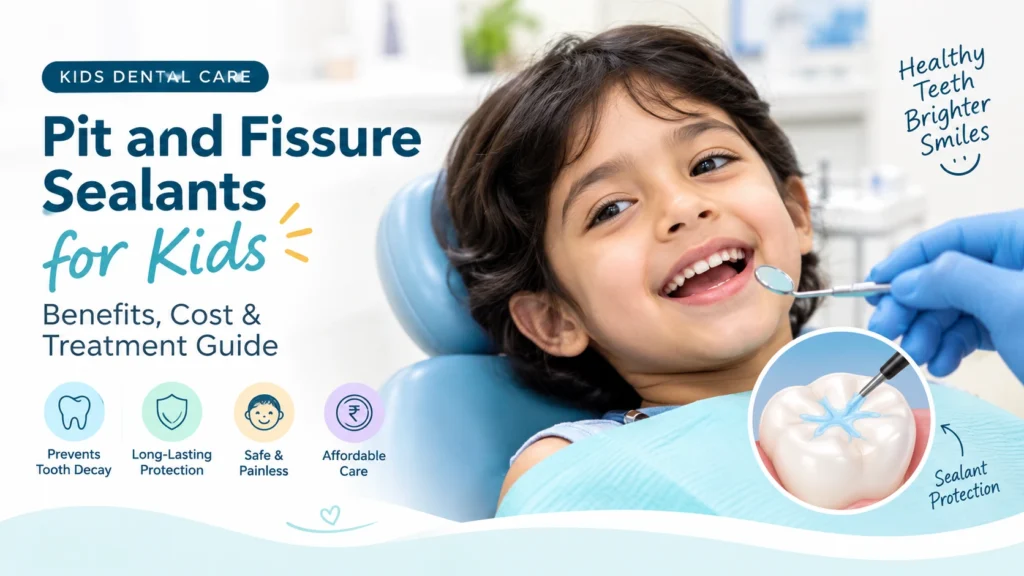
Pit and fissure sealants for kids are one of the simplest, most effective ways to stop cavities before they start. Nearly 60% of cavities in children develop in the deep grooves of their back teeth — spots a toothbrush bristle can’t fully reach — and this is exactly the problem sealants were designed to solve. If you’ve ever wondered whether this quick, painless treatment is worth it for your child, this guide covers everything: what sealants are, how they work, the real cost in India, the step-by-step procedure, and how long the protection actually lasts.
As a pediatric dental clinic in Indirapuram, Ghaziabad, we’re often asked by parents from Vaishali, Vasundhara, and Noida whether sealants are “really necessary” or just an upsell. Below, we break it down honestly so you can make an informed decision for your child’s oral health.
What Are Pit and Fissure Sealants for Kids?
Pit and fissure sealants are thin, tooth-colored (or clear) protective coatings applied to the chewing surfaces of molars and premolars. These back teeth naturally have tiny pits and grooves — called pits and fissures — that are too narrow for a toothbrush bristle to clean effectively.
Food particles and bacteria settle into these grooves, and over time this leads to pit and fissure caries, one of the most common forms of tooth decay in children. A dental sealant physically fills in these grooves, creating a smooth surface that’s easy to clean and resistant to plaque buildup.
Sealants are typically made of:
- Resin-based sealant material (most common, longer-lasting)
- Glass ionomer cement (GIC) (releases fluoride, often used for partially erupted teeth)
Why Do Children Need Fissure Sealants?
Children are more prone to cavities in molars for a few key reasons:
- Deep, irregular grooves in newly erupted permanent molars (usually appearing around age 6 and again around age 12) are harder to clean than smooth surfaces.
- Developing brushing skills — most kids don’t master thorough brushing technique until around age 8-10.
- Diet high in sugar and starch, which feeds the bacteria responsible for decay.
- Thinner enamel on newly erupted teeth makes them more vulnerable in the first few years after eruption.
If a tooth already has decay in these grooves, a teeth filling or restoration may be needed before or instead of a sealant.
According to the American Academy of Pediatric Dentistry’s clinical guideline on pit-and-fissure sealants, sealants are effective in preventing and arresting decay in the grooves of molars in children and adolescents when applied soon after the teeth erupt.
Key Benefits of Dental Sealants for Kids
1. Prevents Cavities Before They Start
Sealants act as a barrier, stopping food debris and bacteria from settling into the grooves of molars — addressing the root cause of decay rather than treating it after the fact.
2. Painless and Non-Invasive
Unlike a filling, sealant application involves no drilling, no anesthesia, and no discomfort. Most children tolerate the procedure easily, even on their first dental visit.
3. Quick Procedure
A single tooth can be sealed in just a few minutes. A full set of molars is usually completed within one 20-30 minute appointment.
4. Cost-Effective in the Long Run
Sealants cost a fraction of what a filling, crown, or root canal for children would cost later. Preventing decay is almost always cheaper than treating it.
5. Long-Lasting Protection
With proper care, sealants can last 3-5 years or longer, protecting your child through the years when their brushing technique is still developing.
6. Builds Positive Dental Visit Experiences
Because the procedure is quick and pain-free, it helps children build confidence and reduces dental anxiety for future visits.
Which Teeth Need Sealants — and When?
The best candidates for sealants are the first and second permanent molars, since these have the deepest grooves and highest decay risk.
| Tooth | Typical Eruption Age | Ideal Time to Seal |
|---|---|---|
| First permanent molars | 6-7 years | Soon after eruption |
| Premolars | 9-11 years | As soon as fully erupted |
| Second permanent molars | 11-13 years | Soon after eruption |
| Baby (primary) molars with deep grooves | 3-6 years | Case-by-case, if high cavity risk |
Sealants work best when applied shortly after a tooth erupts and before decay has had a chance to start — which is why regular dental check-ups matter as much as the treatment itself.
Regular pediatric dental consultations and prevention checkups make it easy to time sealant placement right after a new molar erupts.
Pit and Fissure Sealants for Kids: Procedure Step by Step
Parents often want to know exactly what happens during the visit. Here’s the typical process:
- Cleaning the tooth – The tooth surface is thoroughly cleaned to remove plaque and debris.
- Drying and isolating the tooth – Cotton rolls or a dry field is used to keep the tooth free of saliva.
- Applying an etching gel – A mild acidic gel roughens the enamel surface microscopically, helping the sealant bond properly. This is rinsed off after a few seconds.
- Drying again – The tooth is dried thoroughly before the sealant is placed.
- Applying the sealant material – The liquid resin is painted directly into the pits and fissures.
- Curing with a special light – A curing light hardens the sealant within seconds, turning it into a durable protective coating.
- Checking the bite – The dentist checks that the sealant doesn’t interfere with your child’s bite.
The entire process is comfortable enough that most children don’t need any numbing or sedation.
Pit and Fissure Sealant Cost in India
Sealant cost varies depending on the number of teeth treated, the material used, and the clinic. On average, in the Delhi NCR region (Indirapuram, Ghaziabad, Noida, Vaishali, Vasundhara):
| Item | Approximate Cost (Per Tooth) |
|---|---|
| Resin-based sealant | ₹500 – ₹1,200 |
| Glass ionomer sealant | ₹400 – ₹1,000 |
| Full mouth sealant (4-8 molars) | ₹2,000 – ₹8,000 |
Prices vary based on clinic, material, and individual case complexity. For an accurate quote for your child, we recommend an in-person consultation.
For an accurate quote for your child, book an appointment with our team.
Compared to the cost of a filling (₹1,500-₹4,000 per tooth) or root canal treatment for children, sealants are a highly cost-effective preventive investment.
How Long Do Dental Sealants Last?
With good oral hygiene, sealants typically last 3 to 5 years, and some can last even longer. During routine dental check-ups, your dentist will check whether the sealant is intact and reapply if it has chipped or worn away — this is usually a quick, no-cost adjustment.
Signs a sealant may need attention include:
- Visible chipping or wear on the tooth surface
- Food consistently getting stuck in that tooth
- New sensitivity in the sealed tooth
Are Sealants Safe for Children?
Yes. Pit and fissure sealants have been used in pediatric dentistry for decades and are considered one of the safest, most well-researched preventive treatments available. Some parents ask about BPA (Bisphenol A) exposure from resin sealants — studies show the amount released, if any, is extremely minimal and far below any level of concern, especially compared to everyday BPA exposure from other sources.
Sealants vs. Fluoride Treatment: What’s the Difference?
Parents often confuse the two, but they work differently and are usually used together for maximum protection:
| Feature | Sealants | Fluoride Treatment |
|---|---|---|
| What it does | Physically seals grooves | Strengthens enamel chemically |
| Best for | Chewing surfaces of molars | All tooth surfaces |
| Application | One-time, lasts years | Reapplied every 3-6 months |
| Protects against | Pit and fissure decay | General enamel demineralization |
Most pediatric dentists recommend combining both sealants and periodic fluoride application as part of a complete cavity-prevention plan.
Caring for Sealants at Home
Sealants reduce cavity risk significantly, but they don’t replace daily oral hygiene. To help sealants last as long as possible:
- Brush twice daily with a fluoride toothpaste
- Encourage flossing, especially between molars
- Limit sticky, sugary snacks and frequent snacking
- Schedule dental check-ups every 6 months so sealants can be monitored
- Avoid chewing on very hard foods like ice or hard candy
When Should You Book a Sealant Appointment?
The ideal window is shortly after your child’s first and second permanent molars erupt — around ages 6 and 12. However, it’s never too late to get sealants if your child’s molars are cavity-free. If your child already has visible decay in the grooves, a filling may be needed first before or instead of sealant placement.
If your child has already developed a cavity or is in pain, read our guide on handling a pediatric dental emergency.
Frequently Asked Questions
Is the sealant procedure painful for kids?
No. Sealant application doesn’t involve drilling or injections, so there’s no discomfort. It’s one of the most comfortable pediatric dental treatments available.
At what age should my child get sealants?
Most dentists recommend sealants as soon as the first permanent molars erupt, typically around age 6, and again for second molars around age 12.
Can sealants be applied on baby (milk) teeth?
Yes, if a child’s baby molars have deep grooves and a higher cavity risk, sealants can be applied to primary teeth as well, at the dentist’s discretion.
Do sealants fall off easily?
Sealants can wear down gradually over years or occasionally chip if a child bites something very hard, but they’re generally durable and checked at every dental visit.
Will insurance or costs be an issue?
Sealants are among the most affordable preventive dental treatments. Many dental insurance plans in India partially or fully cover sealants for children — it’s best to confirm with your provider.
Do sealants replace the need for brushing and flossing?
No. Sealants protect the chewing surfaces specifically, but daily brushing and flossing are still essential for overall oral health and to protect other tooth surfaces.
Give Your Child’s Smile Long-Term Protection
Pit and fissure sealants are a simple, painless, and affordable way to protect your child from one of the most common causes of childhood cavities. Catching the right window — soon after molars erupt — makes all the difference in avoiding fillings, root canals, or crowns down the line.
At Renaissance Dental Clinic, Dr. Anamika Jain and our team specialize in gentle, child-friendly preventive dentistry for families across Indirapuram, Vaishali, Vasundhara, Ghaziabad, Noida, and Delhi NCR. If you’d like to know whether your child is a good candidate for sealants, we’re happy to assess and advise during a consultation.
📍 64-66 LGF, Gate No-2, Jaipuria Mall, Ahinsha Khand II, Indirapuram, Ghaziabad, U.P. 201014 📞 0120-4225557 ✉️ info@renaissanceclinicindia.com