
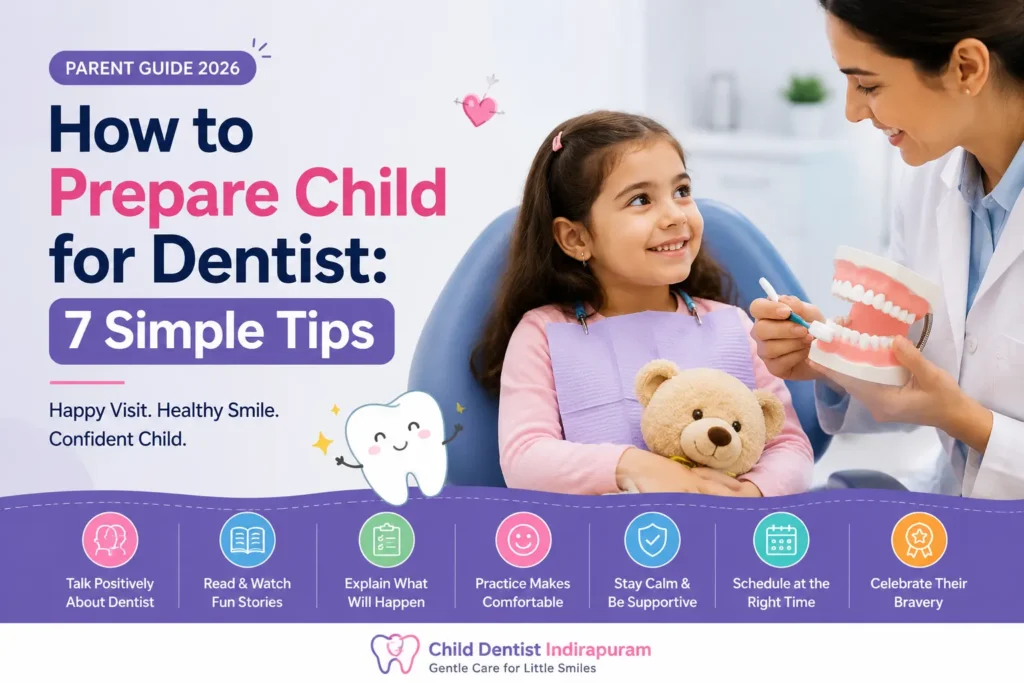
Learning how to prepare child for dentist visits can make the difference between a lifetime of dental anxiety and a lifetime of easy, stress-free checkups. Most kids aren’t naturally afraid of the dentist — they pick up on how the adults around them talk about it. With a little planning, you can turn your child’s first appointment into a calm, even fun, milestone.
This guide walks you through exactly when to schedule that first visit, how to talk about it, and simple steps to prepare your child for dentist day.
Table of Contents
- When Should Your Child’s First Dental Visit Happen?
- 7 Tips to Prepare Your Child for the Dentist
- What Actually Happens at the First Visit
- Mistakes to Avoid Before the Appointment
- Book Your Child’s First Visit
- FAQs
When Should prepare child for dentist Visit Happen?
Most dental associations recommend booking your child’s first checkup by their first birthday, or within six months of their first tooth appearing — whichever comes first. It might feel early, but these initial visits aren’t really about “fixing” anything. They’re about getting your child comfortable with the dentist’s chair, the sounds, and the routine, long before any real treatment is ever needed.
Starting early also gives your dentist a chance to catch small issues — like early decay, alignment concerns, or a tongue-tie — while they’re still easy to manage.
7 Tips to Prepare Your Child for the Dentist
1. Choose the Right Time of Day
Book the appointment for the morning, when your child is well-rested and not close to nap time. A tired, hungry, or cranky child has far less patience for anything new.
2. Use Simple, Neutral Language
Avoid words like “pain,” “shot,” or “hurt” — even when reassuring them it won’t happen. Saying “it won’t hurt” can plant the idea that it might. Instead, describe the visit factually and positively: “The dentist is going to count your teeth and make sure they’re strong.”
3. Practice at Home First
Role-play being the dentist. Let your child “examine” your teeth with a soft toothbrush or toy mirror, then switch roles. This simple game makes the real exam feel familiar rather than scary.
4. Read Books or Watch Videos About Dentist Visits
Age-appropriate books or short videos showing a friendly dentist visit help build a mental picture of what to expect — which naturally reduces anxiety.
5. Bring a Comfort Item
A favourite stuffed toy, small blanket, or toy can go a long way in helping your child feel secure in an unfamiliar chair.
6. Stay Calm and Confident Yourself
Children pick up on parental anxiety instantly. If you approach the visit calmly and positively, your child is far more likely to mirror that same calm energy.
7. Keep Expectations Realistic
Not every child will cooperate perfectly on the first try, and that’s completely normal. The goal of the first visit is a positive experience, not a flawless one — even a short, calm visit where your child just sits in the chair is a win.
What Actually Happens at the First Visit
A first pediatric dental visit is usually brief and low-pressure. Typically, the dentist will:
- Review your child’s medical and dental history
- Perform a gentle exam, often with your child on your lap for younger toddlers
- Check for early signs of decay, bite issues, or oral habits like thumb-sucking
- Demonstrate safe brushing technique
- Offer guidance on diet, fluoride, and home care
If your child can’t stay calm partway through, most pediatric dentists are happy to pause or reschedule rather than force the exam — the priority is building a positive association, not completing every step in one sitting.
Mistakes to Avoid Before the Appointment
- Don’t over-promise. Saying “it definitely won’t hurt at all” can backfire if your child later associates any discomfort with being lied to.
- Don’t schedule around naps or meals. A hungry or overtired child has a much shorter fuse.
- Don’t use the dentist as a threat. Avoid phrases like “if you don’t brush, the dentist will have to pull your teeth.”
- Don’t skip the first visit until age 3 or 4. Waiting too long means missing early opportunities to catch decay or alignment issues while they’re simple to manage.
Book Your Child’s First Visit
At Child Dentist Indirapuram, we specialise in making first dental visits calm, gentle, and even fun for young children. Our team is trained to work at your child’s pace, using friendly language and a relaxed environment so your child’s very first dental memory is a good one.
If you’re wondering how to prepare your child for the dentist, the best first step is simply booking that first appointment — everything else follows naturally with the right guidance.
FAQs
1. At what age should my child first see a dentist?
By their first birthday, or within six months of their first tooth erupting — whichever comes first. This may sound early since baby teeth eventually fall out, but early visits are about prevention and familiarity, not treatment. They let the dentist track how your child’s teeth and jaw are developing right from the start.
2. What if my child cries or refuses to open their mouth?
This is completely normal for a first visit, especially for toddlers under three. Pediatric dentists are trained to work gently at a child’s pace using distraction, simple language, and patience. If your child genuinely can’t settle, it’s perfectly fine to pause the exam or reschedule rather than force cooperation — a rushed, stressful visit can do more harm to their long-term comfort with dental care than simply trying again another day.
3. How long does a first dental visit usually take?
Most first visits are brief, typically 15–30 minutes. The focus is on comfort, a gentle look at the teeth and gums, and helping your child get familiar with the chair, sounds, and instruments — not on completing a lengthy procedure.
4. Should I stay in the room during the exam?
Yes, for toddlers and young children, staying close by is recommended. Many dentists will actually have your child sit on your lap for the exam itself, which helps them feel secure. As children get a little older and more confident, some dentists may suggest letting them go back alone to build independence.
5. What should I bring to the appointment?
Bring your child’s medical history, any previous dental records if available, and a comfort item such as a favourite stuffed toy or small blanket. If your child has a special “dentist book” or video you’ve used to prepare them, mentioning it to the dentist can help them use the same language during the visit.
6. Will the dentist use any tools that might scare my child?
For a first visit, dentists generally avoid anything that looks intimidating. Most first exams involve a simple visual check, sometimes with a small mirror, and no drilling or injections unless there’s a specific issue that needs addressing. Many practices also let children touch or “try out” tools beforehand to make them feel less unfamiliar.
7. What if my child has never had a cavity check before and I’m worried something’s wrong?
That’s exactly what the first visit is for. If the dentist does spot something like early decay or a developing bite issue, catching it now — while it’s minor — usually means simpler, less invasive treatment than waiting until it’s a bigger problem.
8. How can I make the car ride or wait at the clinic easier?
Keep the mood light and avoid over-explaining or dwelling on the visit right before you arrive. A favourite song, a short story, or a small snack (finished before the appointment, not during) can help keep your child calm and distracted in the waiting room.
9. What should I do if my child has had a bad experience before?
Talk to the dentist beforehand so they’re aware and can adjust their approach — going slower, explaining more, or breaking the visit into shorter steps. Avoid discussing the previous bad experience in front of your child right before the appointment, as it can reinforce the anxiety rather than ease it.
10. How often should follow-up visits happen after the first one?
Most dentists recommend a checkup every six months, similar to adults, though your dentist may suggest a different schedule based on your child’s specific risk of cavities or developmental needs. Regular visits from an early age help keep each appointment routine and low-stress rather than a big event.
Ready to prepare your child for their first dentist visit? Book an appointment with Child Dentist Indirapuram and give your child a calm, positive start to lifelong dental health.